Panel 1 – Think Again: What We Get Wrong About Health Care Payment and Why It Matters

July 22, 2026

9:40 am-

10:30 am

In Person Event

Misconceptions about how payment works don't just confuse the conversation, they can impede constructive policy conversation. At the Alliance's 2026 Thought Leader Workshop, experts kept returning to the same blind spots, the ones that quietly steer debates off course before they begin. This panel brings together voices from insurance and system design, hospital policy, physician and provider payment, and drugs and devices to name the misconceptions they encounter most and to unpack what changes once they're corrected. 

By the end of this session, participants will be able to:

  • Identify key misconceptions and blind spots in the health care payment policy conversation across major payment domains.
  • Understand the correction of the misunderstandings. 
  • Understand how closing gaps in payment literacy can support more constructive policy dialogue.

Speakers:

  • Moderator: Julie Rovner, Chief Washington Correspondent, KFF Health News
  • Aisha Pittman, MPH, Senior Vice President of Government Affairs, National Association of ACOs (NAACOS)
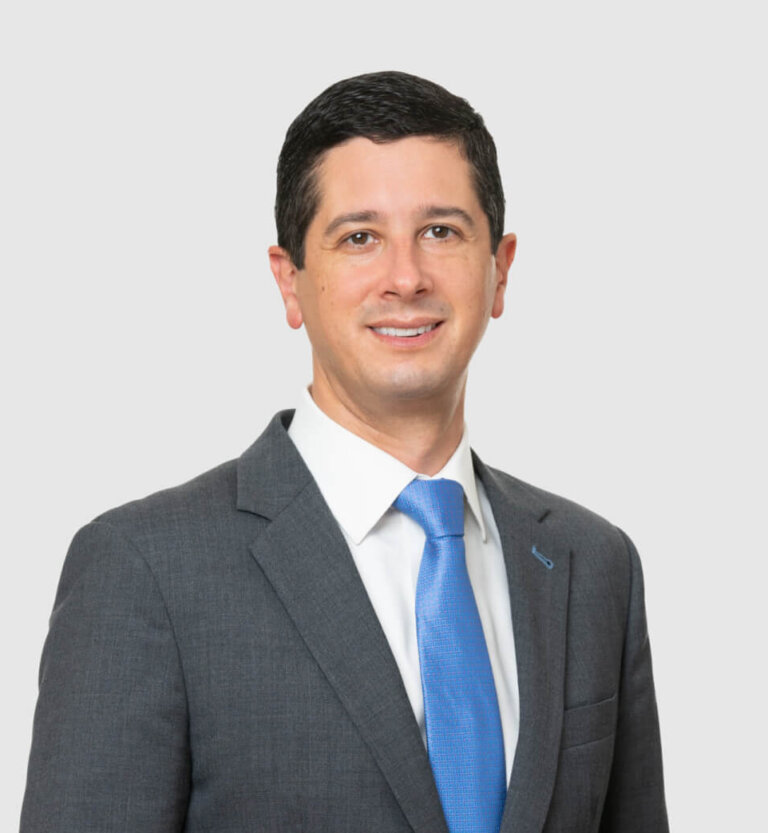
  • Alex Brill, M.A., Senior Fellow, American Enterprise Institute
  • Richard L. Gundling, FHFMA, CMA, Senior Vice President, Healthcare Financial Management Association (HFMA)
  • Stephen Parente, Ph.D., M.S., MPH, Associate Dean, Carlson Global Institute, Professor of Finance and Minnesota Insurance Industry Chair of Health Finance, University of Minnesota


Speakers

Julie Rovner

Chief Washington Correspondent, KFF Health News
Read Bio

Julie Rovner, chief Washington correspondent, hosts the KFF Health News weekly health policy news podcast, “What the Health?” Previously, she spent 16 years as a health policy correspondent for NPR, where she helped lead the network’s coverage of the passage and implementation of the Affordable Care Act. Julie is the author of the critically praised reference book “Health Care Politics and Policy A to Z,” now in its third edition. In 2005, she received the National Press Foundation’s Everett McKinley Dirksen Award for Distinguished Reporting of Congress. Before working at NPR, Julie, a University of Michigan graduate, covered health policy for National Journal’s Congress Daily and for Congressional Quarterly, among other organizations.

Aisha Pittman, MPH

Senior Vice President of Government Affairs, National Association of ACOs (NAACOS)
Read Bio

Aisha T. Pittman, MPH, is Senior Vice President of Government Affairs at the National Association of ACOs (NAACOS), where she leads the organization’s advocacy and thought leadership efforts, advancing policies that accelerate the adoption of value-based care and highlighting the importance of provider-led transformation. She brings more than 20 years of health care experience, with expertise in payment policy, alternative payment models, and quality improvement. Her insights are regularly sought by Congress and national media, and she has been recognized by Modern Healthcare as one of the “100 Most Influential People in Healthcare” and as a Leading Woman in Healthcare. Ms. Pittman holds a Master of Public Health, a Bachelor of Science in Biology, and a Bachelor of Arts in Psychology, from The George Washington University.

Alex Brill, M.A.

Senior Fellow, American Enterprise Institute (AEI)
Read Bio

Alex Brill is a senior fellow at the American Enterprise Institute (AEI), where he studies tax, budget, health care, retirement security, and trade policies. He also works on health care reform, pharmaceutical spending and drug innovation. He has testified numerous times before Congress on tax policy, labor markets and unemployment insurance, Social Security reform, fiscal stimulus, the manufacturing sector, and biologic drug competition. Before joining AEI, Brill served as the policy director and chief economist of the House Ways and Means Committee. Previously, he served on the staff of the White House Council of Economic Advisers.

Richard L. Gundling, FHFMA, CMA

Senior Vice President, Healthcare Financial Management Association (HFMA)
Read Bio

Richard Gundling, FHFMA, CMA, is Senior Vice President for the Healthcare Financial Management Association (HFMA). Mr. Gundling is responsible for the technical and content direction for HFMA, managing of its thought leadership efforts, and leadership of its Washington, D.C. activities. He also serves as staff liaison to the Principles and Practices Board of the HFMA. Mr. Gundling has written an extensive number of published articles on broad topics within healthcare finance and the healthcare industry. HFMA is a professional association with over 40,000 members engaged in the financial management of the healthcare sector. HFMA’s thought leadership has covered payment reform, value creation, revenue cycle management, accounting and financial reporting, capital access, and many other areas that drive healthcare organizational high performance. Results of those initiatives have been used by hospitals, rating agencies, regulatory agencies, congressional committees, accounting standard setting bodies, state hospital organizations, and other government and industry leaders.

Stephen Parente, Ph.D., M.S., MPH

Associate Dean, Carlson Global Institute, Professor of Finance and Minnesota Insurance Industry Chair of Health Finance, University of Minnesota
Read Bio

STEPHEN T. PARENTE, Ph.D., MPH, MS is a Professor in the Department of Finance and the Minnesota Insurance Industry Chair of Health Finance in Carlson School of Management at the University of Minnesota and Associate Dean of the Global Institute. He is the President of the American Society of Health Economists (ASHEcon). From 2014-2017, he served as Associate Dean of MBA and MS programs. Dr. Parente is the longest-serving Director of the Medical Industry Leadership Institute (2006-2017). As a Professor in the Finance Department, he specializes in health economics, information technology, and health insurance. Dr. Parente has been the principal investigator on large funded studies regarding medical price transparency, consumer-directed health plans, health information technology, and health policy micro-simulation. In Washington, DC, he served as Chief Economist for Health Policy and Senior Economist on the Council of Economic Advisers in the Executive Office of the President at the White House in Washington, DC, from 2019 to 2021. Previously, he was Senior Adviser to the Secretary for Health Economics in the Department of Health and Human Services, Vice-Chair of Academy Health, and the Governing Chair of the Health Care Cost Institute from 2013 to 2017. He is the Founding Director of the Medical Valuation Laboratory, a nine-college interdisciplinary effort to accelerate medical innovation from scientists, clinicians, and entrepreneurs. Dr. Parente was a health policy advisor for the McCain 2008 Presidential Campaign and served as a Legislative Fellow in the office of Senator John D. Rockefeller IV (D‑WV) in 1992/93. He has a doctorate from Johns Hopkins University.

Experts

Michael Baker, M.S., M.A.

Director, Health Care Policy, American Action Forum
Read Bio

Michael leads AAF’s health care research and analysis portfolio, including prescription drug pricing policy, Medicare and Medicaid payment rules, the Food and Drug Administration, and employer-sponsored insurance markets. His research and analysis have appeared in numerous publications.

Prior to joining AAF, Michael worked in both the public and private sectors on a broad array of health and human services policy. He has provided in-house and multi-client health policy leadership in the private sector, including on policy development, regulatory affairs, and strategic capital planning, for hospitals, payers, investment firms, and other stakeholders. Michael also worked at the Department of Health and Human Services on issues related to drug pricing and pharmaceutical manufacturing, public health, competition and transparency, and innovation policy. His purview has also included health IT interoperability and data exchange, HIPAA, and public health informatics.

Michael holds a master’s degree in biohazardous threat agents and emerging infectious diseases from Georgetown University, a master’s degree in economics from American University, and a bachelor’s degree in biology from the University of Toledo.

Melinda B. Buntin, Ph.D.

Bloomberg Distinguished Professor, Johns Hopkins Bloomberg School of Public Health and Johns Hopkins Carey Business School; Director, Center for Health Systems and Policy Modeling
Read Bio

Melinda J.B. Buntin, PhD joined the faculties of Health Policy and Management at the Bloomberg School of Public Health and of the Carey Business School in July 2023. As one of the top academic health policy leaders in the nation, Buntin will be part of the University’s Knowledge to Action and the Business of Health Bloomberg Distinguished Professor Cluster.

Professor Buntin joined Hopkins from Vanderbilt University, where she was the University Distinguished Professor in the Departments of Health Policy and of Medicine, Health, & Society and held the Mike Curb Chair for Health Policy as Chair of the Department of Health Policy, Vanderbilt University School of Medicine.

Buntin trained in health policy with a concentration in economics at Harvard University where she received her PhD in 2000. She started her professional career at RAND Health and transitioned into several health policy leadership roles during her 12 years in Washington, D.C.. She was the director of the Office of Economic Analysis, Evaluation and Modeling at the Office of the National Coordinator for Health Information Technology and was deputy director of Health, Retirement and Long-Term Analysis at the Congressional Budget Office.

In 2013, she became the founding chair of the Department of Health Policy at Vanderbilt University, a multidisciplinary department within a medical school. During her tenure she grew the faculty from 9 to 22, and started a Health Policy track in the MPH program, as well as a PhD program in Health Policy. Under her leadership and vision, it has become one of the leading departments of its kind.

Buntin is primarily based at the Johns Hopkins University Bloomberg Center at 555 Pennsylvania Ave. NW, where she aims to inform healthcare policy through a newly established health systems and policy modeling center. Buntin’s body of work has built bridges between healthcare policy and public health by advancing our understanding of healthcare delivery and costs, with an emphasis on improving the value created by the healthcare system. The center will address emerging issues in health policy with rigorous empirical work—predictive models and causal inference methods from econometric study designs—with the goal of providing insights to the healthcare sector, businesses, and policymakers on how to improve healthcare delivery and outcomes.

Jonathan Blum, MPP

Non-resident Senior Scholar at the USC Schaeffer Center and Managing Partner, Health Transformation Strategies
Read Bio

Jonathan (Jon) Blum is the co-founder and co-Managing Partner of Health Transformation Strategies, a health policy consulting and advisory firm. He is also a Non-Resident Senior Scholar at the USC Schaeffer Institute. More recently, Jon served as the Principal Deputy Administrator and Chief Operating Officer for the Centers for Medicare & Medicaid Services (CMS). In this dual role, Jon led CMS’s program policy planning and implementation and day-to-day operations for the entire agency. Jon also served as CMS’s Deputy Administrator and Director of the Center of Medicare during the Obama Administration, leading the agency’s Medicare payment and delivery reform strategies and the overall management of the Medicare program.

Athena Chapman, MPP

President, Chapman Consulting

Susan Dentzer, M.S.

President and CEO, America’s Physician Groups
Read Bio

Susan Dentzer is President and Chief Executive Officer of America’s Physician Groups, the nonprofit organization representing more than 360 physician groups focused on patient-centered, coordinated, and integrated health care that is accountable for both costs and quality. Dentzer is a highly respected health policy thought leader, a frequent speaker, and an author of commentaries in the New England Journal of Medicine Catalyst, the American Journal of Public Health, and other publications. She is an elected member of the National Academy of Medicine and the Council on Foreign Relations, and a fellow of the National Academy of Social Insurance and the Hastings Center. Formerly editor-in-chief of the journal Health Affairs, and on-air health correspondent for the PBS NewsHour, Dentzer graduated from Dartmouth; holds a master’s degree in health care delivery science from the institution; is a trustee emerita of Dartmouth, and former chair of Dartmouth’s Board of Trustees.

David A. Hyman, M.D., J.D.

Scott K. Ginsburg Professor of Health Law and Policy, Georgetown University Law Center; John H. Makin Visiting Scholar, American Enterprise Institute (AEI)

Alyssa Keefe, MPP

Senior Vice President, Policy for Entitlement Programs, Federation of American Hospitals

Joshua Liao, M.D., MSc

Professor of Internal Medicine and Chief, William T. and Gay F. Solomon Division of General Internal Medicine, UT Southwestern Medical Center; Commissioner, Medicare Payment Advisory Commission (MedPAC)

Rob Nelb, MPH

Director of Policy, America’s Essential Hospitals

Marc Samuels, J.D., MPH

Board Member
Read Bio

Marc Samuels is founder and CEO of ADVI Health, a health care and life sciences advisory and consulting services firm headquartered in Washington, DC that helps clients accelerate growth, trailblaze innovation, and expand coverage of products and services. Marc also founded the firm’s life science accelerator, adviLAB, to invest in digital therapy, AI, MedTech, and cell and gene therapy clients in early stages of development. Marc has played a role in over 200 product and service projects over the last two decades from cell and gene, to rare and ultra-rare to oncology, and digital therapies. Marc has worked widely across the US health care system to improve regulatory and payer policy, promote appropriate clinical outcomes, and highlight the importance of the patient experience. Before founding ADVI, Marc was a partner in HillCo Partners, an Austin-based public affairs and advocacy company. He served both President George W. Bush and George H.W. Bush at the Texas Health and Human Services Commission, the Governor’s Policy Office, the Vice President’s Council on Competitiveness, and the White House Office of Policy Development, respectively. Marc began his career as an HIV researcher at the Midwest AIDS Behavioral Research Center in Ann Arbor. Marc speaks frequently on business strategy and policy matters. His comments and analyses have appeared in STAT News, The Pink Sheet, Fierce Healthcare, the Journal of Oncology Practice, Medical Economics, among other places. Marc earned his juris doctorate at the University of Texas, a master’s in public health from Yale School of Public Health, and a bachelor’s degree in neuropsychology from the University of Michigan. Marc is a visiting fellow at the Duke-Margolis Center for Health Policy, serves on the Board of Directors of NCCN Foundation, and is on the Advisory Board of the UCSF Rosenman Institute where he co-developed the Rosenman ADAPT and RISE programs, the later specifically created to advise and support founders from underrepresented groups to make the launch and scale of their health tech, digital or life science innovation as successful as possible.

Jake Quinton, MD, MS, MPH

Chief Medical Officer, Parts A/B, Center for Medicare, Centers for Medicare & Medicaid Services